author: David Whittemore
published: Sat Jun 9 19:44:29 PDT 2018
Welcome, #listeningclub'ers!
We hope you were able to enjoy the "Mo" album.
Here's the backgrounder for what you heard.
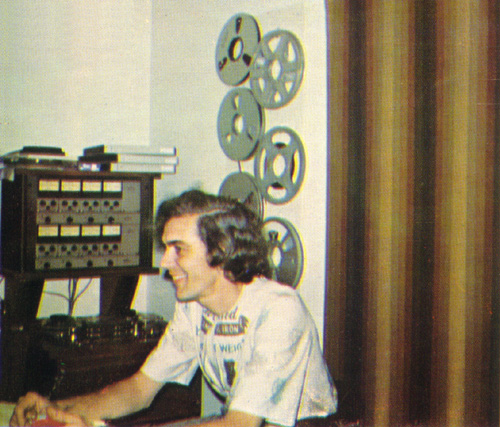
My father, Maurice (Moe) Whittemore Jr
quit the corporate life in 1972 and used his electronic engineer degree
knowledge to build a recording studio in our rural farmhouse home 20 miles east of Indianapolis, Indiana.

700 West Recording Studios.
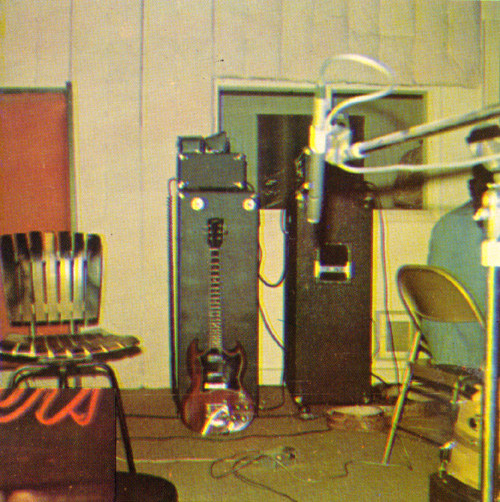
Imagine musicians approaching this scene for the first time! (... that's the studio..?)
He built much of the original equipment: condenser microphones,
amplifiers, speaker systems, plate reverb, a modular 4-channel mixing
console with mic pre-amps and compressors, a 12 oscillator analog
synthesizer - all of his own design!
The walls of our front room were covered with fibreglass bags
for sound treatment. The wall to the den off the front room had a hole
punched in it for a window, and the den became the control room.
I grew up around, and considered normal the constant flow of characters,
the midnight guitar solos, the hammond organ lesie now and again blocking
the stairwell (best acoustics), and we had to limit typical family
activities during acoustic or vocal sessions. Bringing inner-city funk
bands into the sanctuary of our rural home/studio felt like a subversive act.
My father has been called the "George Martin of Central Indiana".
His crazy "have you considered..?" attitude, paired with his formidable
technical abilities led to innovative results, and he encouraged the acts
to stretch and explore. At least two of these artists later
wrote their own songs about their experiences with my father and
their time in the studio! That's high praise.
Before it closed after 12 years, 700 West released 25 albums and as many singles - with some of the most creative production around.
All are highly collectible.
The Zerfas LP? Over $1,000. Primevil? Getting close to $500.
The "Mo" album is a showcase of my father's songwriting, his production skills,
and is powered by players from bands who had been studio customers. My father cherry picked musicians - country, funk, rock, jazz, gospel - whoever was good.
Side A (Sic Sum) is experimental, synth-heavy, with electric oboe, complex harmonies, a bitter song about the music biz, and an extraordinary cut-up piece featuring "random instrumentation, greater Indianapolis". Side B (Sic Simulara Sum) has slightly more traditional compositions featuring guest vocalists. The final track "A Little While" is a standout. Who says modes can't be catchy?
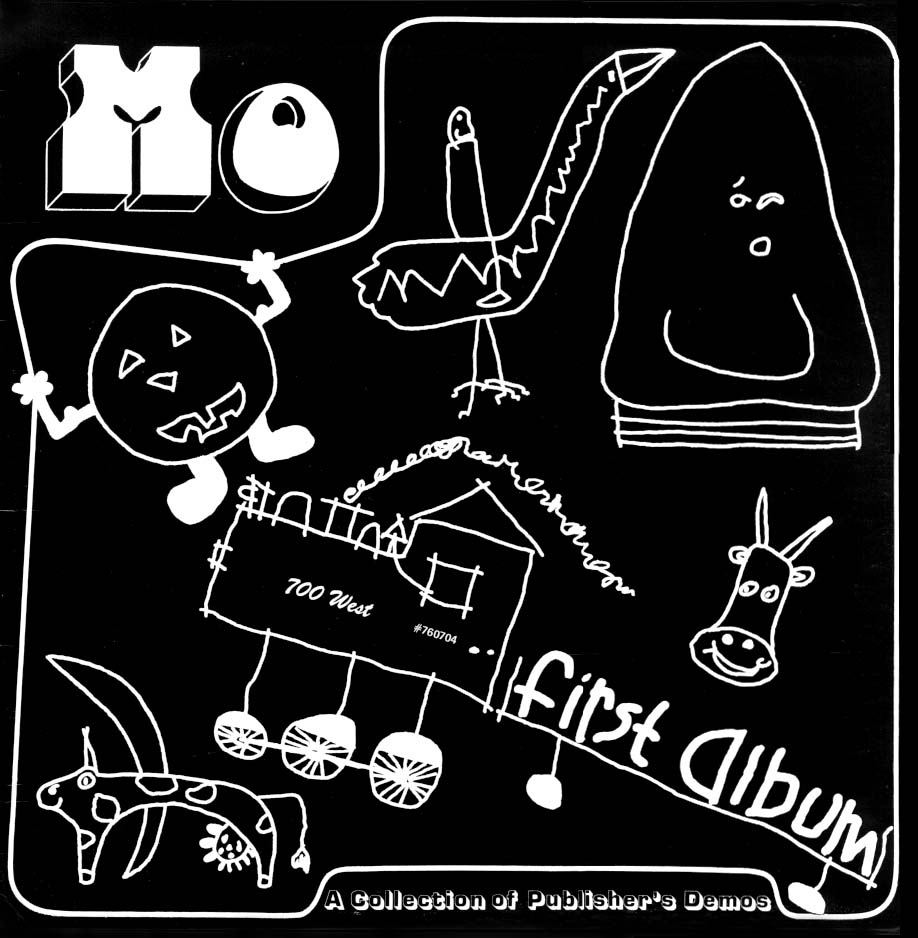
200 copies were pressed, and the sleeve features artwork by his children.
My "Muscle Pumpkin" lent his name to the most abstract track on
the album which consists entirely of razor-bladed tape samples.
If you're interested in a copy of the re-issue, you can find 'em
on ebay.
The Listening Club was ripped from the re-issue, which ends with the extra track "Wait 'Til Yesterday", an Eno-esque track produced nearer the end of the 700 West days.
At age 70, my father returned to graduate school at Butler University to complete the music degree had had started back in the 50's! At age 83, he is working on 19-tone classical compositions - in the den of the same farmhouse 20 miles east of Indianapolis.
And the oboe? That's an early Laubin